Week of July 6, 2026
A short read on the week's readiness-relevant stories. Some have been building over weeks, some are new. Each item links to the original reporting, with a quick line on what it means for your household.
STILL TRACKING
WESTERN WILDFIRES, ESCALATING
The Western fire picture has gone from serious to severe. Utah's Cottonwood Fire has burned close to 96,000 acres at 56% containment, destroying at least 150 structures and heavily damaging the Eagle Point Resort. Colorado has become the new epicenter: the Aspen Acres Fire southwest of Pueblo crossed 87,000 acres, now the eighth-largest wildfire in state history, with around 180 structures lost across Pueblo and Custer counties. Three wildland firefighters were killed on the Snyder Fire near the Colorado-Utah border. Nationally, roughly 40 large fires are burning and more than 3.3 million acres have burned so far this year.
Read more: Cottonwood Fire reaches 96,000 acres (ABC4), Thousands evacuate as Colorado fire spreads (Al Jazeera) and Aspen Acres Fire destroys 180 structures (AccuWeather)
HEAT AND THE GRID, ESCALATING
An extreme heat wave over the eastern half of the country drove electricity demand to an all-time high. PJM Interconnection, which serves 67 million people across 13 states, forecast demand around 166,147 MW, surpassing the grid's previous record of 165,563 MW set in 2006. Heat indices reached 113F in Washington, 112F in Philadelphia, and 110F in New York City, with roughly 160 million people across 30 states under extreme-heat alerts. The Department of Energy issued emergency orders authorizing PJM to curtail data centers and temporarily waive some power-plant limits to hold the system together.
Read more: Largest U.S. grid hits record demand (Bloomberg), Heat wave prompts grid emergency (ABC News), PJM anticipates new record demand (Utility Dive)
ENERGY CHOKEPOINT, STEADY
The Gulf shipping corridor continues a slow, uneven reopening after the June memorandum of understanding, but the recovery is fragile. Crude oil flows through the strait remain close to zero on a seven-day average, well below the pre-conflict baseline, and there has been no meaningful resumption of liquefied natural gas shipments. A fresh outburst of hostilities last week, including attacks on two commercial vessels and a retaliatory strike over the weekend, pulled the situation back from the easing trend of the prior weeks.
Read more: Has the oil shortage turned into a glut? (Al Jazeera) and Saudi Arabia ramps up shipments since the deal (CNBC)
NEW THIS WEEK
FLASH FLOODING HITS THE NORTHEAST
As the West burns and bakes, the East is drowning. More than 60 million people from Ohio to Massachusetts were under flash-flood threat on July 6 and 7, with New York City and Long Island in a level 3 of 4 risk zone. Some areas faced up to 3 inches of rain per hour and totals as high as 8 inches, and part of a wholesale-club roof collapsed in Ocean Township, New Jersey, during the deluge. The threat lands almost exactly one year after the July 4, 2025 Texas Hill Country floods that killed more than 130 people.
Read more: 60 million brace for flash flooding (ABC News) and Roof collapse during New Jersey flooding (FOX Weather)
WINTER WHEAT HARVEST CONFIRMS THE SMALLEST ACREAGE ON RECORD
The 2026 winter wheat harvest is coming in, and it confirms the multi-decade low that has been building all season. USDA pegged the winter wheat yield at 47.6 bushels per acre, the lowest since 2022 and, before that, since 2015. More striking, harvested area of about 22 million acres appears to be the lowest ever recorded. Major Great Plains producing states were hit by significant drought, driving both lower yields and higher abandonment.
Read more: Wheat Outlook (USDA ERS) and Winter wheat yield by year (USDA NASS)
LAKE POWELL HITS ITS LOWEST LEVEL OF 2026
The Colorado River drought driving the Western fires also set a fresh mark this week. Lake Powell dropped to its lowest level of 2026 on June 30 and is now around 24% full, only slightly above its all-time record low from April 2023. Just 800,000 acre-feet is projected to flow into the reservoir through July, about 13% of average. If levels keep falling, hydropower generation at Glen Canyon Dam, which serves seven states, could be forced to shut down.
Read more: Lake Powell reaches lowest level on record (Planetizen) and Powell on track for record-breaking territory (KUER)
SCREWWORM CASES KEEP CLIMBING
The New World screwworm outbreak in U.S. livestock has grown to 16 confirmed domestic animal cases, up from 12 two weeks ago, still concentrated in Texas and New Mexico. USDA continues its sterile-fly release program, animal-movement controls, and surveillance, and 60 to 70% of cases across the U.S. and Mexico so far are in cattle.
Read more: Screwworm situation summary (CDC) and Confirmed detections dashboard (USDA APHIS)
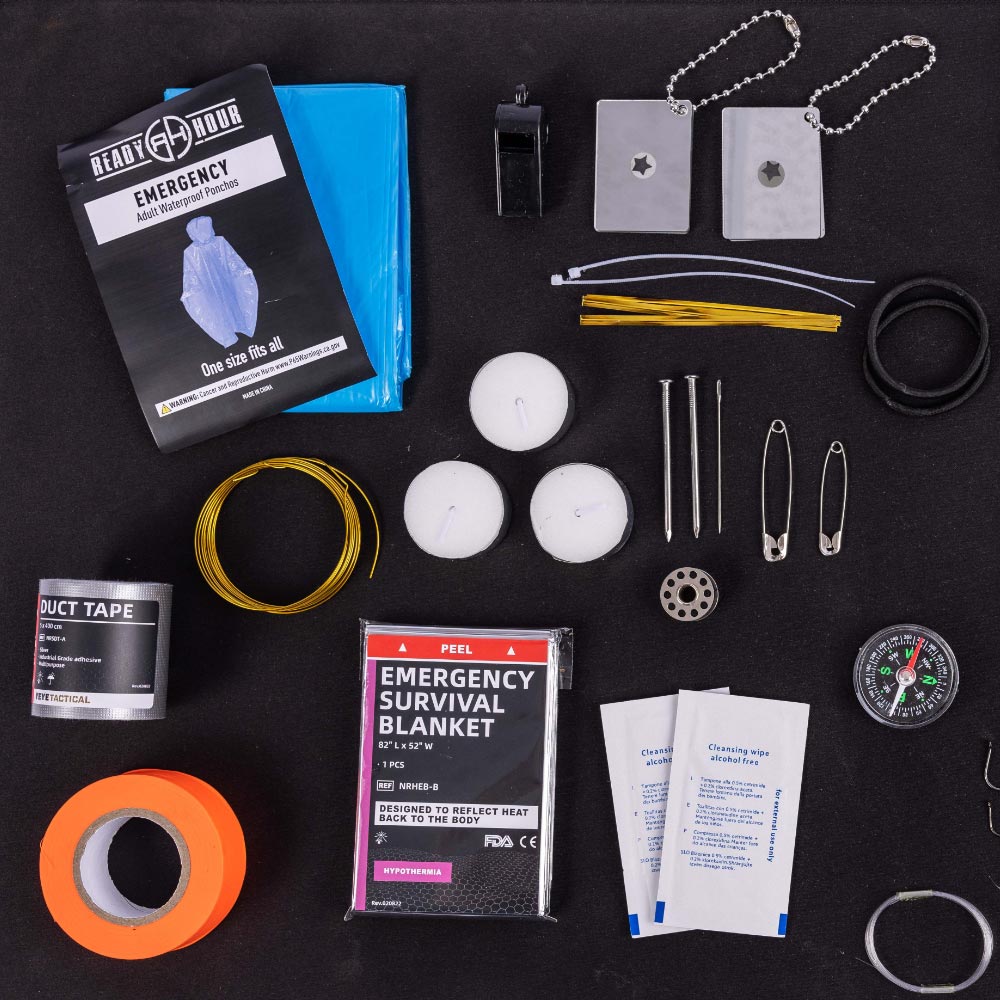
The throughline this week is a country pulled in two directions at once: the West on fire and running dry, the East breaking heat records and then flooding. When conditions swing this hard, the systems you lean on (power, water, roads) are the ones that buckle. The single most useful move right now is the one that covers all of it: a packed go bag and a known evacuation route, ready before you need it, whether the threat is fire, floodwater, or a grid that gives out.